Please note: Place your orders before 16 December 2026 to ensure delivery before Christmas. 

Stainless Steel vs Non-Stick Pots

25 November 2026 / Posted in AMC Products

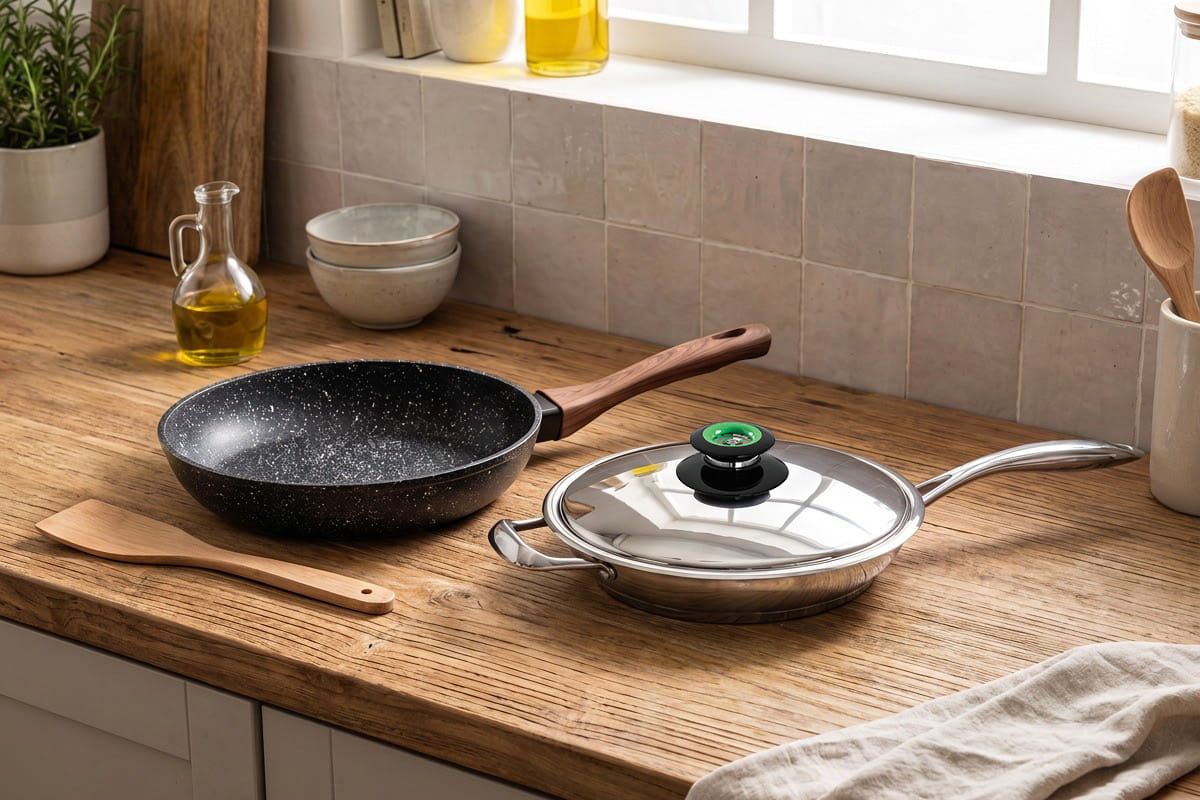
A non-stick pot or pan releases food easily with very little added oil. Stainless steel takes a little more technique, but it doesn't rely on a non-stick coating and can last for decades.

Neither is automatically healthier. Cooking temperature, the amount of water used and how much oil or fat you add also matter. The better choice depends on what you cook and whether you prioritise convenience or long-term durability.

Read more

Stainless Steel vs. Non-Stick Pots: Which Is Better for Healthy Cooking?

Cooking with less oil

Non-stick cookware makes it easy to cook with little or no added fat, particularly for eggs, pancakes and delicate fish.

Stainless steel can also be used with less oil when the temperature is controlled properly. AMC cookware is designed for healthier cooking methods using low to medium cooking temperatures with very little or no added fat or water.

Material and coating safety

Many conventional non-stick coatings are made from PTFE. When used as intended, PTFE-coated cookware is considered safe. It shouldn't be severely overheated, particularly while empty, as PTFE begins to break down at temperatures of around 360°C and above.

The coating can also become scratched or worn over time, affecting its non-stick performance.

Stainless steel doesn't have a synthetic non-stick coating. AMC cookware is made from durable, non-porous 18/10 stainless steel. If you're looking for non-toxic cookware because you'd prefer to avoid a synthetic coating, stainless steel is one option.

Durability

With stainless steel vs non-stick pots, the difference is particularly noticeable over time. A non-stick coating can gradually wear or become damaged, while stainless steel doesn't have a coating to wear away.

AMC stainless steel cookware carries a lifetime guarantee against faulty material or workmanship, provided the item is used as intended, see AMC’s Guarantee for more information.

Nutrient retention

Nutrient retention is affected by how food is cooked, including the cooking time, temperature and amount of water used.

The AMC Way uses low to medium temperatures and minimal added water. The stainless-steel side walls support condensation inside the cookware, allowing food to cook using moisture already present in the ingredients, while the Visiotherm® helps you monitor the temperature.

Different cooking styles

Non-stick cookware works particularly well for foods that stick easily and is generally intended for controlled rather than very high cooking temperatures.

Stainless steel can handle a wider range of cooking methods, from browning and searing to soups and stews. AMC Chef's Pans and Gourmet Fry Pans can handle anything from pancakes and fried fish to steak and stir-fries, while deeper units suit soups, stews, rice, pasta and sauces.

Read more

How Do You Choose Between Stainless Steel and Non-Stick Pots?

Start with the food you cook most often. If you mainly want cookware for eggs, pancakes and delicate foods, non-stick is convenient. If you want something for frying, browning, soups, stews and sauces, a stainless-steel pot or pan gives you more options.

There are a few other practical differences to consider.

Maintenance

Non-stick cookware needs careful handling to protect the coating. Follow the manufacturer's instructions for suitable utensils, temperatures and cleaning.

For everyday cleaning, AMC stainless steel cookware can be washed in hot, soapy water with a soft sponge or in the dishwasher. AMC Classic Cleaner can be used for stubborn marks or stains.

Cooktop compatibility

Induction requires cookware with a compatible magnetic base, so stainless steel isn't automatically induction friendly, however AMC’s Gourmet Cookware range is. AMC cookware can also be used on gas, provided the flame doesn't extend beyond the base.

Budget and longevity

Price varies considerably for both materials, so it's worth considering lifespan as well as the initial cost. Stainless steel can last for decades, while a non-stick cooking surface may eventually wear and need replacing.

AMC also sells individual units as well as cookware sets, so you can start with the pieces you'll use most and add to your collection over time.

Read more

FAQs About Stainless Steel and Non-Stick Pots

Is non-stick cookware safe?

Yes. PTFE non-stick cookware is considered safe when used as intended. Avoid severely overheating it, particularly while empty, and follow the manufacturer's temperature and care instructions.

What counts as non-toxic cookware?

There isn't a standard definition of "non-toxic cookware". The term is often used for cookware without a synthetic non-stick coating, including stainless steel, cast iron and glass.

AMC cookware is made from 18/10 stainless steel and doesn't rely on a non-stick coating.

Can a stainless steel pot go on an induction hob?

Only if it has an induction-compatible base. AMC's Gourmet Range is induction compatible.

Which lasts longer, stainless steel or non-stick cookware?

Stainless steel generally lasts longer because there is no non-stick coating to wear away. The lifespan of non-stick cookware depends on the coating, how often it's used and how it's cared for. 

Browse AMC's individual cookware units and kitchenware to find the sizes and shapes that suit the way you cook.

Read more